Orsoni and the stones of Venice
If you're looking at this blog, chances are that you already know about the Orsoni factory in Venice, source of the world's most beautiful smalti (special enamelled glass, the champagne/caviar of mosaic materials, in case you are new to this). I was lucky enough to visit a few months ago and, although the experience was extraordinary, I decided you would probably have seen plenty of pictures already. But here we are on the first really grey and drizzly day of an English autumn and I thought we might all enjoy a blast of Venetian colour and craftsmanship.


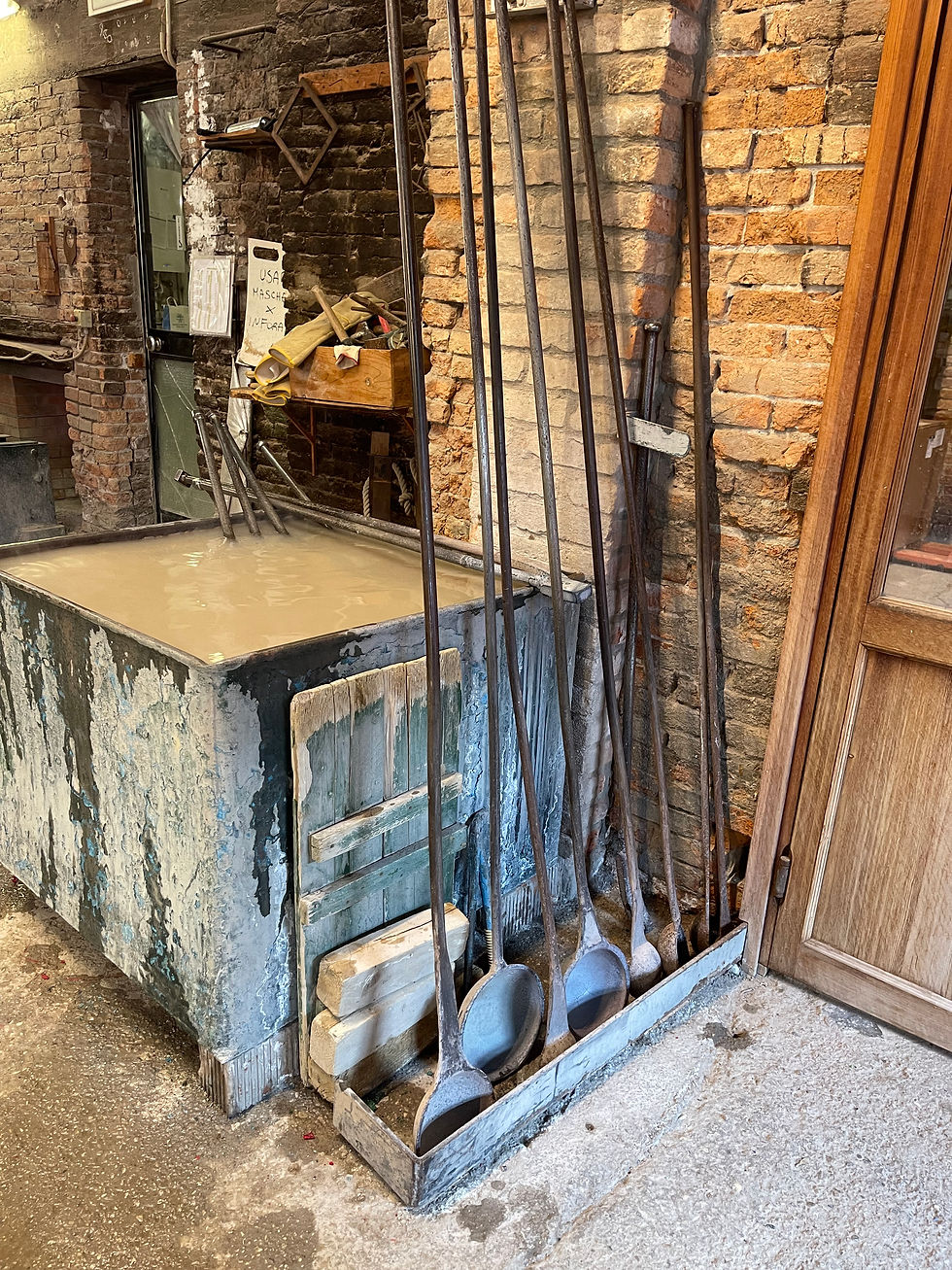


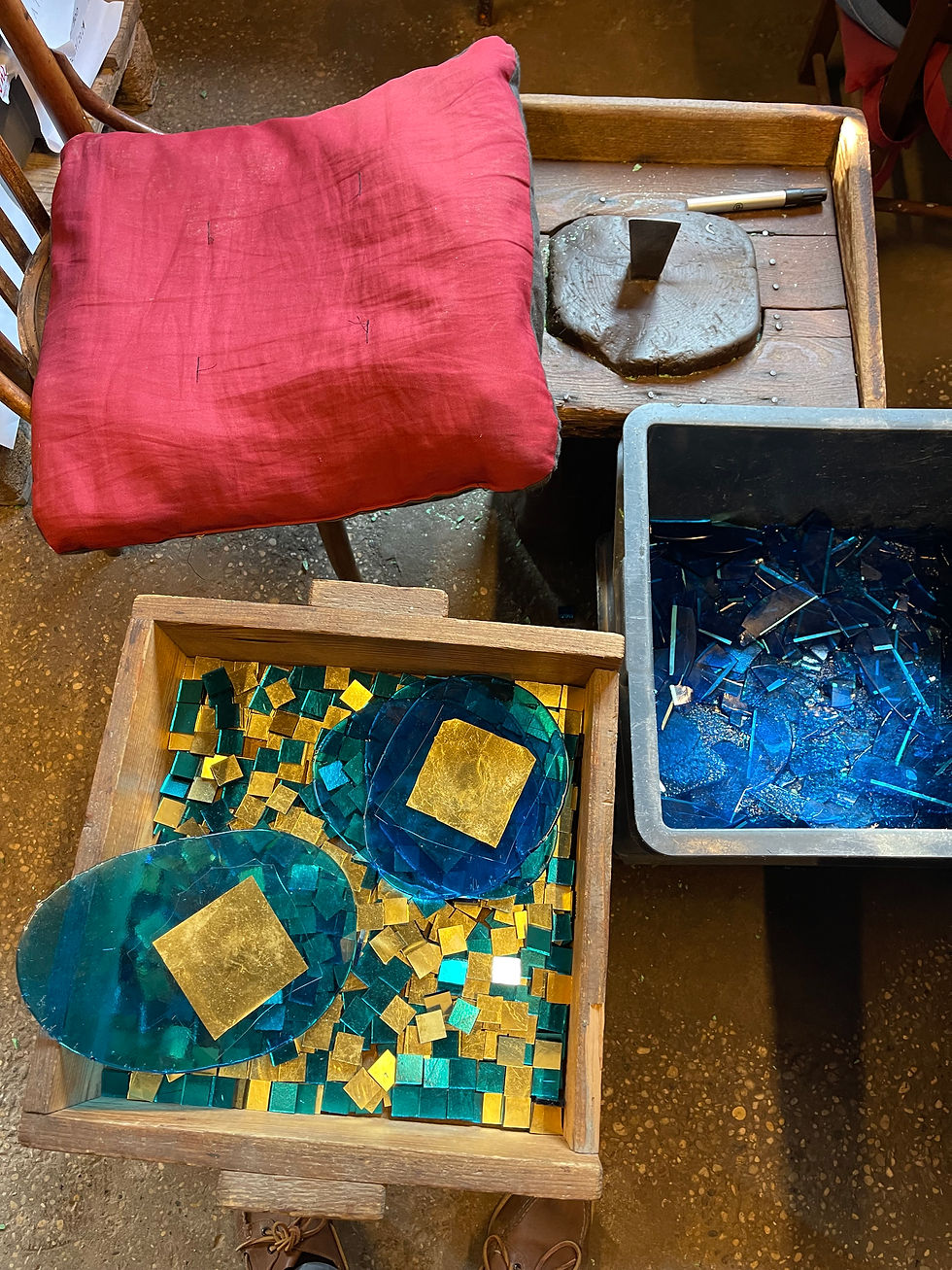


Thanks to Luca Chiesura of Orsoni, who kindly showed us around.
If you've stayed with me this far I think I can assume you are a mosaic nut, and that you won't mind being ambushed with some non-Orsoni pictures of Venice and its mosaics.

On the way to the glass-making island of Murano - this is the Isola di San Michele which has been Venice's cemetery since 1807. Igor Stravinsky and Ezra Pound are buried there. Only the celebrated get to stay put; space is at such a premium that most graves are only offered for a limited period, and remains have to be removed to other sites after a few years.
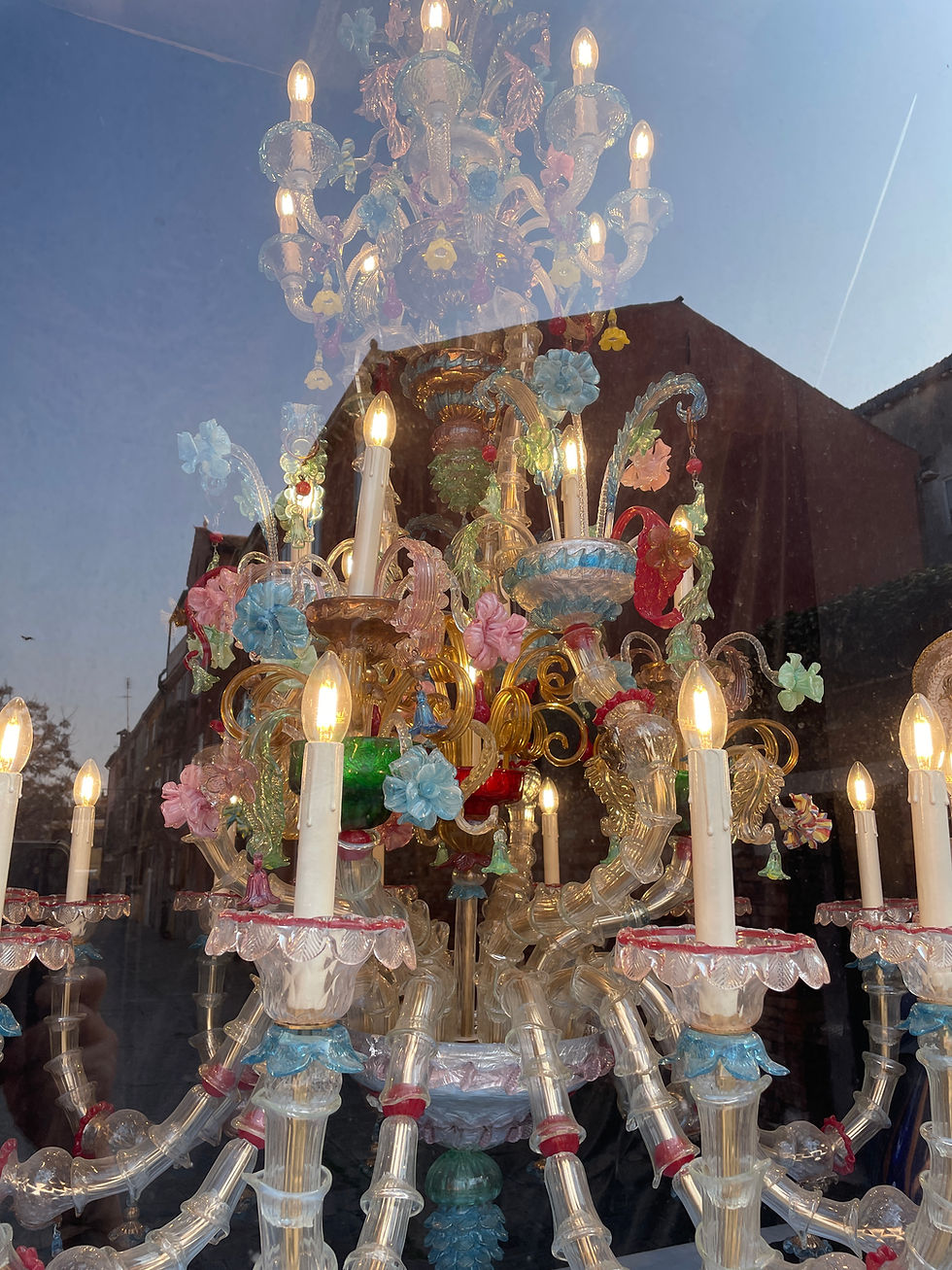
Displays of civic and artisan pride on Murano:


Next, back in Venice and a visit to the Basilica di San Marco


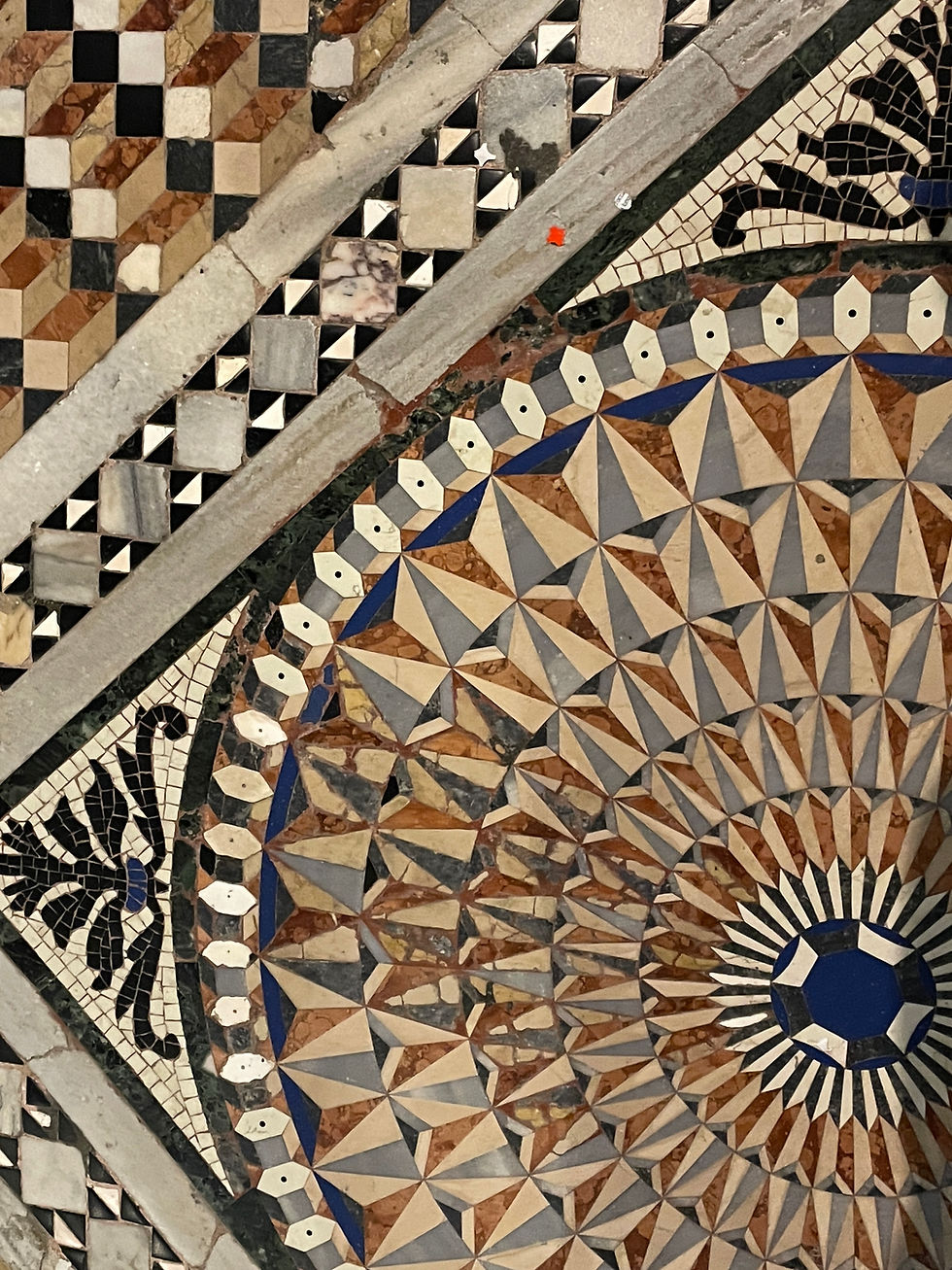
The stone and smalti facings which cover the floors and walls of San Marco are of a breathtaking richness and complexity. This may be partly imperial braggadoccio; many of the exotic materials were looted by the Venetian state from Constantinople at the end of the Fourth Crusade in 1204. But there is no doubt that the abundance of rare stones - and the extremes of human endeavour it must have taken to cut and place them - are primarily aimed at the glorification of God. The dim interior gleams with reflected light and there is a sublimely mystical atmosphere - even though almost everyone experiences San Marco while shuffling along in a queue of thousands, it still fills one with wonder.



This and the following pic show the back of the main altarpiece which is known as the Pala d'Oro. This is one of the supreme masterpieces of the Byzantine age and is made up of numerous panels showing biblical scenes and saintly figures, all wrought in gold and enamel and encrusted (there really is no other word) with precious stones.


The roof mosaics are so high and the lighting so bad that I'm afraid don't have any good pictures of them to show you.
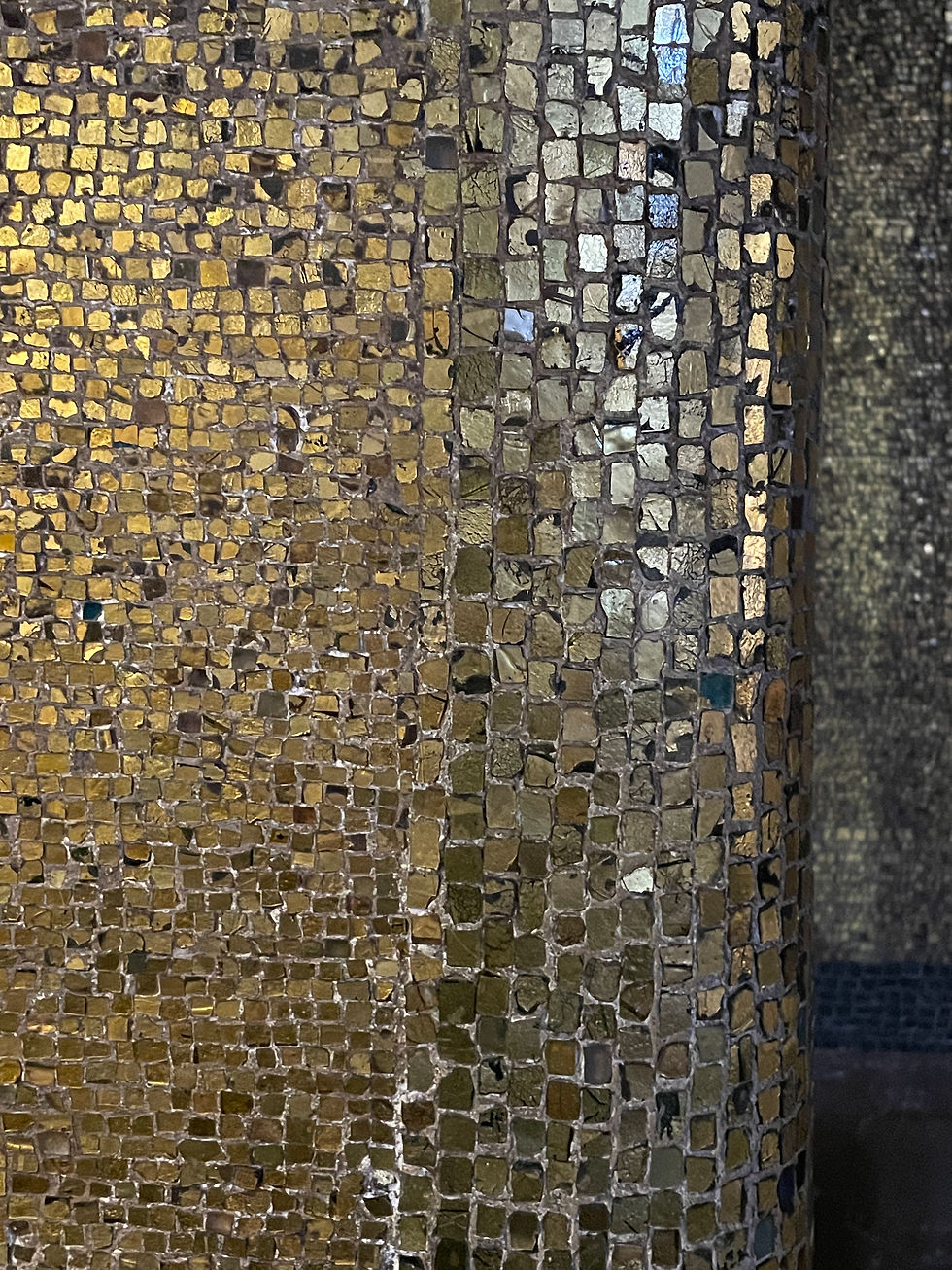
The Basilica has a small collection of mosaic fragments on display in its museum:


If I'm honest, I was much more excited about seeing the horses of San Marco. These four bronze sculptures are thought to have been made in the classical period and it is often suggested that they are the work of the Greek sculptor Lyssipos who flourished in the 4th century BCE - don't just skim over that; it makes them around 2,400 years old! From about 400CE, when they were already a venerable eight centuries old, they stood at the Hippodrome (racetrack) in Constantinople, and there they stayed for the next 800 years until they were carried off by Venetian soldiers in 1204. They were brought to San Marco and placed on the loggia above the main door of the Basilica (replicas stand on that spot now and the originals are living here, out of the rain, in a space just behind the Basilica's facade). Napoleon helped himself to the horses in 1797 and took them to France, but they were brought back to Venice in 1815 after his final defeat.
We are so lucky that such things still exist and give us an idea of the splendour and artistry of the ancient world - I think hubris might lead us to believe that works of this energy and vitality could not have been produced until the modern age, but luckily these spectacular beasts are here to keep us in our places. Really, has there been anything better made in the last 24 centuries?


And finally, the doorbells of Venice. Most are benign, a few are scowling but they're all watching you.

In the end, I thought even the bedside table was staring rudely. Time to go home!


Comments